Y2K Bugs

It was 1999 and every IT organization in the world was getting ready for what might happen when the clock turned over from 1999 to 2000. Lots of programming work to insure there were no date issues. Then, when 2000 happened, nothing actually happened, , , no elevators stopped working, , , no power grids shut down, , , nothing we heard of that actually happened when the year 2000 rolled in.

To have some fun prior to the eventful night, a few of us dressed up as Y2K bugs in a company contest. People in the restaurant we went to for lunch thought we were a bit strange, , , they were probably right, , , but we won the contest and that was a big deal.

y2k bugsThe Y2K Bugs

From my IBM Scrapbook

I began my career with IBM back in the late 1970’s when small and mid-size companies were buying their first computer. It was an exciting time called the “mini-computer days”.

One of the things I remember most was the great fun we had at IBM amidst some very hard work and long hours. It was a great experience where I learned the value of “working hard and playing hard”.

You may be experiencing some of the best time of your career right now. You owe it to yourself to capture a few memories along the way.

Here are a few photos from my IBM days:

Mike Sisco_IBMReceiving an award from Bryan Hathcock, , , Jim Cockerham and Jim Richie

Ginger and I receive Salesman of the Month honors from Macon Lee

After the meeting we played golf and had a big cookout, something we did once a year and it was great spending time on the big houseboat on the lake

A presentation in an off-site event

It was the days of the 3-piece suit and white shirts, , , an early presentation

Ron Scarbrough and me after a sales call

This is what it’s all about, , , my two senior mentors who helped me so much in my early career are on both sides as I receive a Regional IBM Manager’s Award.
Macon Lee, Charles Carroll, Me, Jim Cockerham, Jeannie Brunson

Charles Carroll and Jim Cockerham influenced my career considerably and I’ll always owe them a huge debt of gratitude.

My first presentation

scientistHave you ever been truly scared of something, , , I mean really, really frightened?

I have been truly scared at least once in my life, and it probably isn’t what you might think it would be. It was when I had to make my very first presentation in front of a group of people I did not know.

You need some background
It was a cold, snowy January day when I arrived at my first IBM class in Atlanta. I was 28 at the time and had just graduated from college, , , I was a bit older than a typical college graduate because I took a 4-year detour with the United States Marine Corps.

In the class there were some 30 or so students from all parts of the US, , , we were all proud “IBM rookies” eager to make our mark in the world, , , and we were about to go through IBM’s class called A-Mod.

I remember having to introduce myself to the class like everyone else did and how nervous I got as it got closer and closer for my time to speak. I would soon learn this would just be a teaser.

At the end of the first day, our Instructor brings out flip chart pads and magic markers, , , then he passes out assignment material to each of us. He returns to the front of the class and proceeds to assign us a task for the evening, , , we would learn that homework was going to be a common theme in all IBM classes.

Our assignment — develop a short, 5-minute flip chart presentation on the topic we were given. Everyone had a separate topic, , , no teamwork in this exercise. The following day we were to deliver a stand-up presentation of our topic using the flip chart bullet points we came up with from the material we were given.

The presentation would be recorded so we could view it and our Instructors could critique them to help develop our presentation skills. Our presentations were to be graded and this is important because it leads to our final grade average, , , something our future Performance Review from our IBM managers back home would take into consideration.

Grading would be based upon three things: content, organization of the content, and presentation delivery.

I had never made a presentation to a group of people I did not know, , , never, , , and even though I was older than most in the room and a former Marine, , , I was intimidated by the whole thing.

Intimidated is putting it mildly, , , I was scared.

Not physically scared mind you, , , but afraid of making a mistake, looking foolish, or just generally not doing well in front of my peers, , , even though I didn’t know any of them. It’s a trait I would learn 15 years later is pretty consistent among IT people.

Well, we all go to our apartments and everyone focuses on developing their presentation. My flip charts look great and I believe I have created bullet points that capture the key points of my topic. I was totally comfortable with this part.

But I’m still very much afraid of this task because of the presenting part to come, , , so much concern that I gave real thought to checking out, going to the airport, and heading home to tell my manager that I did not sign up to be  a salesman.

Fortunately, I didn’t go through with it. Can’t hurt that much, can it?

The next day we begin making our presentations and we deliver them in alphabetical order, , , so my name beginning with an “S” means I’ll deliver mine in the afternoon.

How much of the morning sessions do you think I heard?

That’s right, , , none of them.

Why? because I’m thinking through my presentation and analyzing every aspect of it, , , trying to remember what I need to say, etc. The closer we get to my turn, the more nervous I become.

Well, it finally comes my time to deliver, so I go up to the front of the room, they help me place my three flip chart sheets on the stand, , , put a microphone around my neck, , , , , , , ,

Did I mention they were going to place a microphone around our neck and record the whole thing?

More pressure!!!!!!!

OK, I’m finally all set and ready to begin, , , but first, a question for you:

Are you aware of what happens when you are truly scared, , ,  I mean truly frightened about something?

presentation_8Well, your body does some strange things that I learned for the first time at this moment in my life.

First, you can perspire or sweat.

Your body can tremble or shake.

Your voice can quiver, even come out at a higher pitch.

Your heart certainly beats faster and pounds like it’s coming out of your chest. I know this to be true.

But there is another thing that happens to you that I had no idea of until it occurred to me in this presentation.

Your mouth gets very dry, , , cotton dry, , , dry as the desert sand.

Well, when you speak your tongue actually bounces off the roof of your mouth as you say certain words and when your mouth is cotton dry, your tongue sticks to the roof of your mouth. As you talk, your tongue gets stuck and when it releases, there is a distinct “POP“.

That’s right, you will hear an intermittent “popping” sound, , , you don’t know exactly when the “POP” will occur but it definitely does.

And remember, I have a microphone hanging around my neck.

As I work through my presentation, I hear this “POP” from time to time and I’m sure everyone else hears it. It’s a bit unsettling, but something occurred during this ordeal, , , as I went further and further into my presentation, it all got easier and easier.

My presence here today is testimony that this frightful event did not kill me, , , but it truly did scare the “bejeevies” out of me leading up to the event.

Mike Sisco – early IBM presentation – 1977

I’ve been very nervous in a few other large presentations in my career, but they got easier the more I gained experience in presenting.

The lesson
Today, I can deliver a presentation to hundreds of people and I don’t get nervous, , , as long as I’m prepared and know my material. What this says is that you can overcome your fears and learn how to do things that once intimidated you. It’s all about making an investment to become what you want to become.

They say the two things people are most afraid of are public speaking and death. Well, I’ve overcome the first one. If I can do it, I’m fairly confident anyone can.

Strong communication skills can help you considerably in your career, , , well worth the investment to gain them.

Something to think about
After I made my presentation in the IBM A-MOD class, the lady sitting next to me went up to do her presentation, , , and she “knocked it out of the park”. She was really good and did a super job, , , partly I thought because she had some teaching experience and had experience getting in front of people.

I was impressed so during a break I told her what a great job she did. Her reply surprised me. She said she was extremely nervous because of all the people in the room with IT degrees and experience, , , he degree and background was in History so she was intimidated a bit, , , just like me and probably the rest of us in the class but for different reasons.

What this told me is that “everyone gets scared” when presenting or doing things out of their comfort zone. From that point on, presentations got easier, , , and easier, , , and even better as I gained more and more experience.

Introduction to information technology (IT)

It was March 1970 when I reported to Marine Corps Base – Kaneohe, Hawaii. My orders were to report to Data Processing Platoon 10 (DPP10) and work in the computer operations section of Headquarters Company. I had recently completed Computer Sciences School in Quantico, Virginia and stationed a few months in San Diego, California while waiting for permanent orders. When they asked, “Would you like to go to Hawaii?”, , , it was an easy decision.

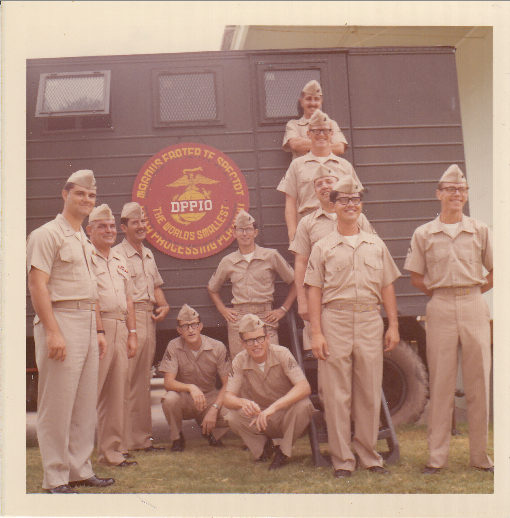
USMC_KaneoheDPP10 – MCB Kaneohe, Hawaii – 1971
That’s me standing underneath the DPP10 sign

We are standing in front of a mobile data processing vehicle which houses the necessary equipment to run an IT shop in the field at that era. Today, you can do everything in the field from a laptop, tablet or SmartPhone.

After a couple of weeks training they assigned me to the 3rd shift to run the 3M applications for the air wing section of the base. 3M stood for Machines, Materials and Manpower. Anything that took place within the air wing of Kaneohe was reported through the systems I ran.

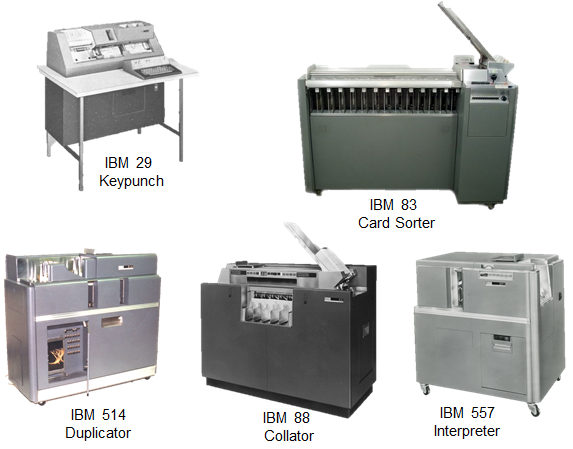
This was still early in the days of computers. We used an 80-column card computing system and machines related to the IBM 1401 Computer Systems. It was a very manual process to sort, collate and prepare the cards so we could run them through the 1402 Card Read/Punch machine to print a report. For example, in one of my end-of-month jobs it took me over 8 hours to sort over 50,000 cards and print a single report, , , I spent all weekend at the end of each month producing a few monthly reports.

storage_IBM 1401 computer systemstorage_IBM punch card technology

The good part was that 3 weeks out of each month I only needed to run the daily reports for my area of responsibility. This took about 3 hours to do, , , when finished I could leave the office. This is how my golf game improved tremendously my first year in Hawaii.

I would go into the office early and 2nd shift usually finished their jobs by 9:00pm, , , so I got started early and finished my work by midnight to 1:00am. On many occasions I would go sleep on the beach just off the 15th hole of KBAY Golf Club and get up at daylight, , , take a shower in the clubhouse locker room and then play 36 holes of golf every day.

Walked and carried my golf clubs the whole time, , , no carts because we couldn’t afford it nor want to use them, , , a great time. It was a tough living but someone had to do it. 🙂

There were some real characters in DPP10. Joe Rock and Frank Bonomi from Boston, Don “Gibby” Gibson from Salt Lake City, Bruce Fagrie, Mike Northway, Gunny Crawford, Dave Sistek and others.

usmc_DPP10 MarinesGunny Bill Crawford, Bruce Fagrie, Don “Gibby” Gibson, Dave Sistek

Working in a “card shop” gave me basic understanding of data early in my career because you could physically see what it is on an 80-column card.

storage_80 column card

An 80-column card represented a record of something, , , it might be the details of a helicopter or possibly transaction details of a flight taken with the helicopter, , , it could be information about a piece of equipment or a part,  or it might be information about a Marine assigned a post within the air wing of the base such as a pilot, crash crew member, or mechanic.

I remember thinking it was really strange when a certain Staff Sergeant would walk in, ask for the 3M aircraft master card deck, , , thumb through it until he found the card he was looking for, , , pull it out and then tear it up before handing the card deck back to me. It was how he physically deleted an aircraft or piece of equipment from inventory.

Life was simple in those days, , , but processing data was much harder and more time consuming. I like having the computing power we have in our laptops today.

Save

Save

Save

Save

Time for a career change

career-3It was September 1, 2000, , , my 51st birthday and a day that changed my life forever.

I walked into my CEO’s office and told him that I planned to leave the company and wanted to transition in a way that would create a win-win for both of us.

We agreed to a 6-month contract that would help us both make the transition a positive one. This contract would get extended twice and run 13 months before we finally parted ways.

I had been considering the idea of creating a company and working for myself for some time. This isn’t something you do haphazardly and without considerable thought, , , or at least I don’t.

So, , , on September 1, 2000, , , MDE Enterprises was born, , , sort of.

I still wasn’t sure what MDE would do, , , i.e., what products or services we would sell. Initially, the company was a consulting company because most of the revenue came from the contract with my former company our first year.

What I did know in the early days of the company was that I did not want to be a traditional consulting company. I didn’t want to have to “work an hour to be paid an hour”, , , plus the travel and the seemingly constant need to be in marketing mode to insure you have contracts lined up was unappealing.

I’ve never looked back even though there have been times when the going was difficult and at least once when I thought I might have to go work for another company again.

In future posts I’ll chronicle some of the key events that have allowed us to run a successful small company for 13 years that “helps IT managers of the world achieve more success”.

The last 13 years have been an amazing ride full of interesting coincidences, travel, and being able to do things that helps many around the world achieve more success.

My first day at IBM

When I joined IBM I had never met my new boss. He had taken the advice of his counterpart in Memphis, TN that I would be a good hire so Bryan hired me for the Jackson, MS office sight unseen. We talked on the phone but my first visit with him would be my very first day of work.

I remember getting to the office 15 minutes early. Bryan told me to come in at 8:30am and we would get started. I show up at 8:15am, but the doors weren’t open yet, , , they didn’t unlock the main doors until 8:30am. Oh well, I’m standing on the front porch of the IBM building looking pretty dumb (I’m thinking) as car after car passes me on their way to the back parking lot. They were all IBMers coming in for work and they entered the building via a back door I didn’t realize was there, , , wouldn’t have mattered because I couldn’t have gotten in anyway.

Finally, I meet Bryan Hathcock, , , a big gray haired gentleman with a rough exterior. Later, I would learn he was just a big teddy bear and someone I would look to as one of the best managers of my career.

After a short meeting, Bryan showed me around and introduced me to the IBMers of our division who were in the office that day. It was a very friendly group and very professional as I remember. The guys all wore white shirts and pinstripe suits in those days and so did I although my suits were on the inexpensive side at that point.

Bryan told me to make a copy of some paperwork and I made a big mistake by asking him, “Where is the Xerox?” He quickly made me understand that we used IBM copiers, not Xerox, , , I never made that mistake again.

Bryan gave me a piece of advice that first day that I have used throughout my career and I still use today. He said, “Mike, I’m going to pair you up to make client calls with some of our senior System Engineers (SE) and Marketing Reps. When you’re with them, observe how they do things, , , how they organize their time, how they plan for a client call, how they deal with client issues, etc. What you need to do is learn from them and incorporate the best of what you see into how you do things. If you see something that works really well, use it to your advantage and become the best you can be.”

I’ve done this my entire life and many of the things I do today are because I observed how well they worked for someone else. It was very good advice.